

BioAdhere™ SUP250
BioAdhere™ SUP250
Couldn't load pickup availability
Polyurethane Adhesive | Two-Component
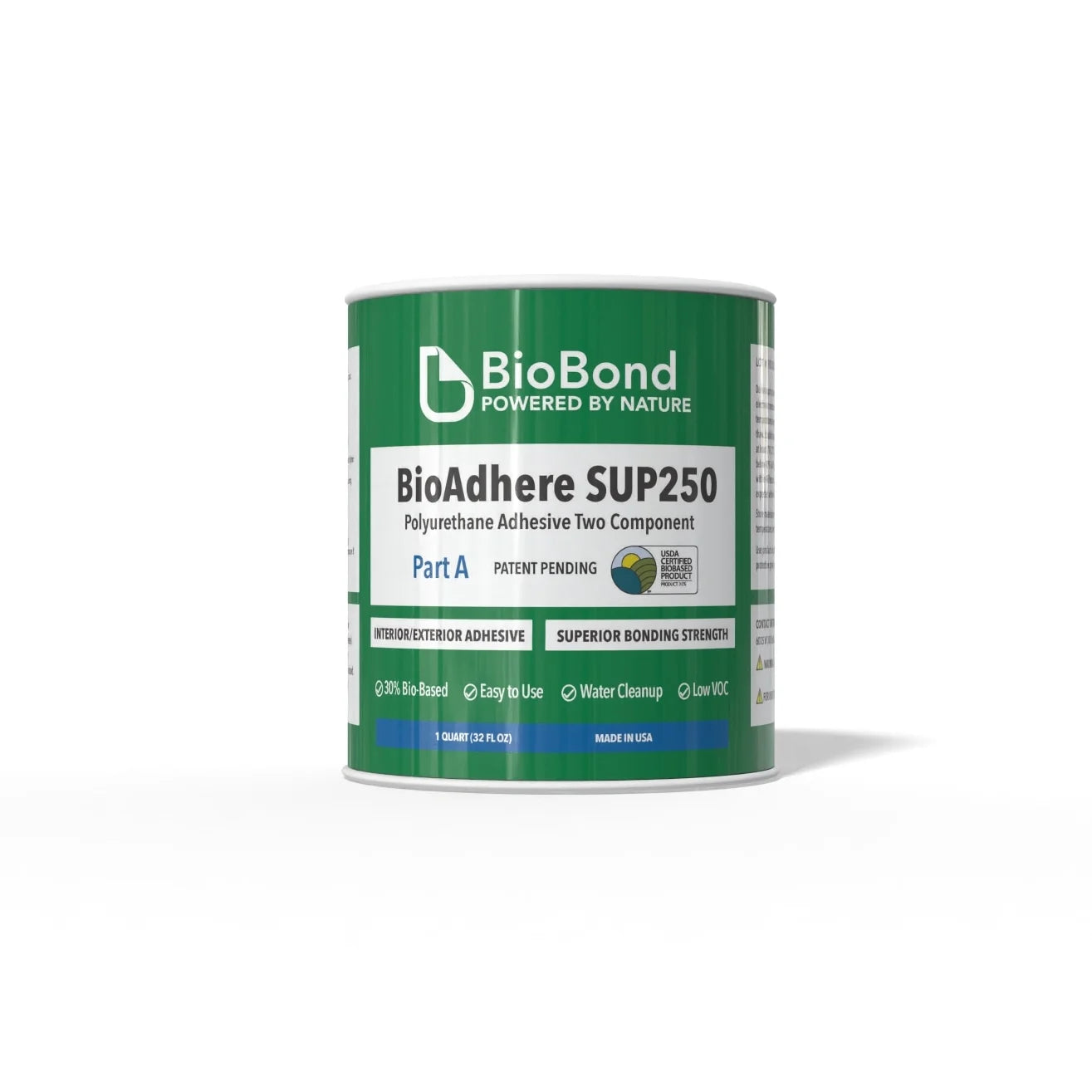
BioAdhere™ SUP250 is a USDA BioPreferred certified, two-part urethane adhesive engineered for demanding mobility and defense environments. Designed to replace traditional mechanical fastening methods, BioAdhere™ SUP250 supports the transition to lighter-weight, more durable structures without compromising bond strength.
Built for high-performance bonding across metal, glass, wood, and plastic, BioAdhere™ SUP250 gives manufacturers a versatile adhesive solution for advanced transportation, drone, aerospace-adjacent, and defense applications. Its plant-based, biobased urethane formulation is designed to support structural performance while reducing reliance on conventional petroleum-based adhesive systems.
Share


Key Benefits
- Superior versatility: Bonds metal, glass, wood, and plastic
- Structural replacement: Designed to replace fasteners, screws, and welding in select applications
- Built for mobility: Supports lightweight structures for drones and emerging mobility platforms
- Extreme durability: Engineered for demanding defense and mobility environments
- USDA BioPreferred certified: Made with plant-based, biobased material content
- Low odor performance: Designed to support better air quality during application
- No added microplastics or PFAS: Formulated without added PFAS or microplastics
Ideal Applications
- Drones and unmanned systems
- Emerging mobility platforms
- Lightweight structural assemblies
- Defense components
- Transportation manufacturing
- Metal, glass, wood, and plastic bonding
- Applications replacing fasteners, screws, or welding
MORE INFORMATION
Collapsible content
Directions for Use
Directions for Use
- Mix Part B into Part A in a 1:1 ratio for 2–3 minutes, then apply via brush or roller.
- Static mix tips are needed to adequately mix this class of material when dispensing via continuous operation.
- Application to the substrates should be made as soon as possible. Larger quantities and/or higher temperatures will reduce the working time.
- Join the adhesive coated surfaces and allow to cure. Higher temperatures will speed up curing.
- Keep assembled parts from moving during cure. The bond should be allowed to develop full strength before subjecting to any service load.
- Excessive uncured adhesive can be cleaned up with ketone type solvents.
FAQs
What is the best adhesive for bonding materials in drones?
The best adhesive for drones depends on the substrates, load requirements, vibration profile, and environmental exposure. In many advanced mobility applications, engineers look for high-performance structural adhesives that can bond lightweight materials while supporting durability and design flexibility.
How can adhesives replace screws, rivets, or welding in mobility and defense systems?
Adhesives can reduce part count, distribute stress more evenly, support lighter assemblies, and enable bonding across different materials. In many applications, they help engineers avoid the added weight, stress concentration, or thermal distortion associated with traditional fastening methods.
When should engineers use adhesives instead of mechanical fasteners in drone design?
Adhesives are often a strong option when weight reduction, smoother load distribution, mixed-material bonding, and streamlined part design are priorities. Mechanical fasteners may still be required in some locations, but adhesives can play a major role in overall structural efficiency.
What adhesive works best for drones and unmanned aerial vehicle structures?
The best adhesive system for UAV structures depends on the design and operating environment. Engineers typically look for strong adhesion to composites, metals, and plastics, along with durability under vibration, thermal cycling, and demanding service conditions.
How do structural adhesives improve drone flight time through weight reduction?
By reducing reliance on heavier fasteners and allowing more efficient assembly design, structural adhesives can help lower total system weight. Less weight can support improved energy efficiency and potentially longer flight time, depending on the platform.
What is the best adhesive for bonding metal, plastic, and composite materials together?
Mixed-material assemblies typically require an adhesive engineered for strong adhesion across dissimilar substrates and for durability in real operating conditions. Surface preparation, joint design, and cure profile all play a major role in success.
How do adhesives perform in high-vibration environments like drones or defense vehicles?
Well-designed structural adhesive systems can perform very effectively in high-vibration environments because they distribute stress across the bond line rather than concentrating it at a few fastening points. This can help reduce fatigue-related issues when the system is properly engineered and applied.
What adhesive systems are used in advanced mobility platforms and UAVs?
Advanced mobility platforms often use structural adhesive systems in assemblies involving composites, lightweight metals, housings, panels, and internal components. The exact system depends on the mechanical, thermal, and environmental requirements of the application.
How do structural adhesives compare to mechanical fasteners in aerospace or defense systems?
Structural adhesives can offer benefits such as lower weight, better stress distribution, cleaner surface profiles, and mixed-material compatibility. Mechanical fasteners still have an important role in many assemblies, but adhesives can significantly improve design freedom and efficiency.
What causes adhesive bond failure in demanding environments?
Bond failure is often linked to poor surface preparation, contamination, improper cure, bad joint design, incompatible materials, or environmental stresses beyond the intended design window. In demanding applications, process control is just as important as adhesive selection.
What environmental conditions affect structural adhesive durability?
Temperature swings, moisture, chemicals, UV exposure, cyclic loading, and vibration can all affect long-term adhesive durability. Engineers should evaluate adhesive performance based on the real conditions the assembly will face in service.
How important is surface preparation when bonding structural components?
Surface preparation is critical. Even a strong adhesive can underperform if the bonding surface is contaminated, improperly treated, or inconsistent. Reliable bonding depends on careful prep, material compatibility, and disciplined process control.
What tests matter most for adhesives used in mobility and defense applications?
The most relevant tests depend on the application, but engineers commonly evaluate bond strength, peel and shear performance, fatigue resistance, vibration performance, environmental aging, and durability under temperature and moisture exposure.
What adhesive solutions are PFAS-free and low VOC for advanced manufacturing?
Manufacturers increasingly look for adhesive technologies that support safer and healthier production environments while still meeting demanding performance requirements. Low VOC, plant-based adhesive innovation can help align performance goals with modern manufacturing priorities.